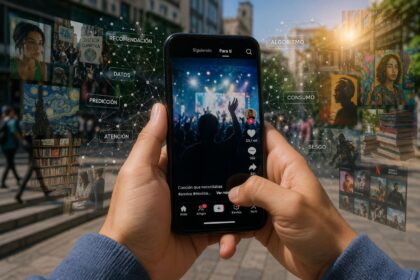

Storytelling has always been one of the most powerful ways we understand and connect as human beings. From tales told around the fire to today’s social media, the need to share experiences and emotions remains unchanged. However, artificial intelligence (AI) is profoundly transforming the way these stories are constructed, disseminated, and experienced.
Today, algorithms capable of analyzing large volumes of data can identify patterns in audience behavior: what interests them, what emotions they seek, and what formats they consume most frequently. With this information, content creators can personalize stories to connect more directly with each reader or viewer. AI suggests topics, structures texts, and helps optimize the way a story is told, from paragraph length to the pace of social media posts.
This capability cuts a double swathe. On the one hand, it allows for a more relatable and relevant narrative; on the other, it poses risks of homogenization. When algorithms prioritize what’s already popular, the most original stories or less-heard voices can be relegated. In other words, AI has the power to shape what is seen, read, and shared, and this can indirectly influence how we think and what we consider important. Therefore, it must be understood not only as a tool, but also as an actor that influences the public sphere and the construction of social meaning.
Human creativity
Even so, human creativity remains irreplaceable. AI can generate text, suggest combinations of ideas, and even create rough drafts of a story, but it lacks the capacity for genuine emotion, intuition, or ethical context that storytellers bring. Content creators, then, are tasked with balancing the efficiency this tool offers with the authenticity of the human voice. In this sense, AI functions as an ally: a co-author that facilitates the creative process, but should never replace the human perspective or the emotional richness of a well-crafted narrative.
A visible example of this transformation is found in social media. Every post, video, or thread can be optimized by systems that analyze how users interact with content. This means that narratives are strategically produced and distributed to maximize engagement . However, it also reminds us that our decisions as audiences are influenced by algorithms, which suggest what we should read, watch, or share, conditioning the diversity of experiences we have access to.
Beyond the technical aspects, the integration of AI into storytelling poses an ethical and social challenge. How do we ensure that the stories being amplified continue to represent the diversity of human voices? How do we prevent content optimization from resulting in a loss of creativity or the repetition of monotonous patterns? The answer is not in rejecting technology, but in using it consciously. AI must be a tool to enhance storytelling, not a mold that limits imagination or the plurality of perspectives.
The role of algorithms
AI opens up possibilities for experimenting with storytelling methods that previously seemed impossible. Algorithms can help coordinate this content, ensuring coherence and pacing, while also measuring audience reaction. This turns storytelling into a dynamic, interactive process, much closer to the way people actually consume information today.
Artificial intelligence is therefore challenging the way we tell stories. It forces us to reflect on authenticity, diversity, and responsibility in communication. For 21st-century storytellers, the task is clear: use these tools as allies without losing the human essence of each story. AI can optimize, suggest, and expand our stories, but emotion, ethics, and creativity remain the exclusive property of those who tell them.
In the end, stories are still our way of understanding the world, and AI, if used consciously, can help us tell them in richer, more inclusive, and deeper ways. The narrative of the future will be a balance between technology and humanity, capable of creating meaningful experiences that connect, move, and inspire us. In other words, it restores our sense of wonder, the very thing that makes us human and that we must never lose.