
Summary
Public communication is a fundamental pillar for ensuring equitable access to sport, physical activity, and recreation, as well as for strengthening the relationship between the State and citizens. Despite technological advances and media diversification, communication strategies in sports still face challenges related to message fragmentation, lack of interaction, and limited citizen ownership. This article examines public communication in sports management from a situational perspective based on Situational Strategic Planning (SSP), integrating a socio-technical approach that analyzes the interaction between actors, digital media, and narratives.
Through a theoretical and comparative analysis, key trends in sports communication are identified, such as the use of artificial intelligence, big data , algorithms, sustainability, and inclusive communication. Finally, recommendations are presented to optimize transparency, participation, and innovation in public sports communication, aligned with the Sustainable Development Goals (SDGs) and local and global policies.
Abstract
Public communication is essential for ensuring equitable access to sports, physical activity, and recreation, as well as strengthening the relationship between the State and citizens. Despite technological advancements and the diversification of communication channels, sports communication strategies still face challenges such as message fragmentation, limited interaction, and low citizen engagement. This article examines public communication in sports management from a situational perspective based on Situational Strategic Planning (PES), integrating a socio-technical approach that analyzes the interaction between actors, digital media, and narratives.
Through theoretical and comparative analysis, key trends in sports communication are identified, including the use of artificial intelligence, big data , algorithms, sustainability, and inclusive communication. Finally, recommendations are proposed to enhance transparency, participation, and innovation in public sports communication, aligning with the Sustainable Development Goals (SDGs) and both local and global policies.
Keywords
Public communication, sports management, citizen participation, open government, communication strategies.
-
Introduction
Public communication in sports management is more than just the dissemination of information. It is a concept that, when implemented, strengthens social cohesion, government transparency, and citizen participation. In a hyperconnected world, where digitalization has transformed traditional communication models, public entities face the challenge of orienting their strategies toward new media scenarios and citizen dynamics that demand more horizontal and participatory interaction.
The United Nations has recognized the role of sport in sustainable development and has expressed the need to implement inclusive and accessible communication strategies to ensure that all people, regardless of their geographic location or socioeconomic status, can benefit from the opportunities provided by physical activity and recreation. However, despite these guidelines, barriers to public communication about sport persist in Latin America, related to a lack of inter-institutional coordination, the exclusion of communities, and the limited use of emerging technologies for communication management.
From a theoretical perspective, this article is based on Carlos Matus’s Situational Strategic Planning (SSP), an approach that allows us to understand public communication as a dynamic and flexible process, where interaction between actors, adaptation to changing contexts, and the combination of traditional and digital tools are decisive for the effectiveness of messages. It also incorporates Manuel Castells’s contributions on the «network society» and the power of communication, along with an analysis of transmedia narratives and participatory communication models applied to sports.
This article seeks to analyze how public communication can strengthen sports management in public entities, fostering more effective relationships with citizens. Using a narrative approach and theoretical analysis, it will explore the main challenges and opportunities in this field, identifying innovative strategies that transform communication into a tool for social participation and empowerment.
-
The problem
Public communication management in sports faces challenges that limit its effectiveness and impact on citizens. In many cases, communication is limited to the dissemination of events and administrative achievements, without a clear strategy to ensure the continuity of the message or connection with the community. Furthermore, the use of technical and inaccessible language hinders message appropriation, creating a distance between organizations and the population. The lack of inclusion and representation in content limits the reach of communication campaigns, while one-way communication impedes citizen interaction and participation.
Likewise, the perception of self-promotion by public officials affects credibility, which impacts public trust. Another problem is the lack of metrics and evaluation of communication impact, which makes it difficult to optimize strategies. Similarly, the lack of preparedness for communication crises and misinformation pose risks to the reputation of sports organizations and public trust in the sector.
-
Methodology used
For this analysis of public communication in the management of sport, recreation, and physical activity in public entities, a methodology based on a bibliographic and theoretical review was used. This approach allowed for a qualitative examination of concepts, communication models applied in the sports field, and strategies that have proven effective in the interaction between government entities and citizens.
The literature review included reference sources in public communication, sports management, and citizen participation, as well as the Colombian Constitution, Law 181 of 1995, Law 1712 of 2014, the UNESCO International Charter for Physical Education and Sport, and the Sustainable Development Goals (SDGs). Situational Strategic Planning (SSP) was also incorporated, enabling a socio-technical approach that considers communication as a dynamic process.
-
Conceptualization of public and sports communication
Public communication is a fundamental pillar in the management of sports, recreation, and physical activity in public entities. Its proper implementation strengthens the relationship between the State and citizens, ensuring access to information, active participation, and the development of inclusive sports policies. However, its impact goes beyond the transmission of messages. As Castells (2009) puts it, «communication is sharing meanings through the exchange of information» (p. 87). This implies a dynamic interaction between multiple actors within a social, cultural, and technological ecosystem.
In this way, sport acquires a strategic value within public communication. As stated in Article 52 of the Colombian Political Constitution (1991), access to sport and recreation is a fundamental right, which makes its promotion a duty of the State. Law 181 of 1995, known as the Sports Law, reinforces this idea by establishing that public policies must guarantee equitable access and encourage citizen participation in sports and recreational activities (Colombian Congress, 1995). These laws are aligned with universal principles, such as UNESCO’s International Charter of Physical Education, Physical Activity and Sport (2015), which recognizes communication as an essential means to democratize access to sport and promote values of inclusion, equity, and social well-being.
For this reason, it is essential to differentiate between public communication and institutional communication. Public communication, as Ladrón de Guevara (2020) explains, is understood as «the set of communication actions and tools available to state administrations to connect with citizens» (p. 30). Similarly, Campillo (2010) points out that «its function is not simply to inform, but must serve as an instrument to ensure citizen participation in public life and hold them accountable for their personal choices within a democratic context» (p. 49). Therefore, the approach to public communication is inclusive and seeks to strengthen access to information, transparency, and the exercise of participatory democracy.
Institutional communication, for its part, focuses on managing an entity’s image, reputation, and positioning within the public or private ecosystem (Rodrich-Portugal, 2012), and this is not unrelated to the sports field. It can include promoting an institution’s achievements, strengthening its recognition, and managing its relationships with strategic stakeholders. The confusion between these concepts can lead to communication strategies that prioritize the institution’s image over citizen participation, undermining trust and credibility in the public management of sports.
Public sports organizations often use institutional rather than public communication strategies, focusing their efforts on self-promotion of officials or administrations rather than facilitating real interaction with citizens. This can generate a negative perception in society, where communication campaigns are viewed as political marketing strategies rather than tools for strengthening the right to sport and recreation.
Another element in this distinction is the use of communication channels. While institutional communication tends to focus on official media and structured discourse, public communication should use channels that are more accessible and closer to citizens. In this sense, the use of social networks, digital platforms, and transmedia narratives is essential to achieve greater interaction and participation. Castells (2009) highlights that “the convergence of the Internet and wireless communications has led to the development of horizontal interactive communication networks that connect the local and global at any time” (p. 101). Applied to sports, this means that communication strategies should leverage these tools to generate real-time dialogues and foster citizen ownership of sports initiatives.
Along these lines, public communication is essential for building citizenship and consolidating democratic societies. Its function goes beyond informing or disseminating institutional messages: it involves generating dialogue and constructing shared meanings that allow citizens to exercise their right to information and participation.
As Ladrón de Guevara (2023) puts it, “public communication is the possibility of using tools and means for an institution to generate socialization among its inhabitants, allowing them to be heard and assigning importance to their opinions” (p. 42). From this perspective, public communication should not be understood as a unidirectional process in which the State transmits information to society, but rather as a circular and multidirectional communication model that involves different actors in the generation and dissemination of knowledge. This coincides with what Martín-Barbero (1986) points out, who argues that communication is a space of mediation where different discourses, identities, and power relations are articulated.
In sports management, public communication is key to democratizing access to sports and recreation. Law 181 of 1995 establishes that the promotion of sports must be based on criteria of equity and participation, so communication strategies must ensure that information reaches all sectors of society, especially those historically excluded from these spaces. This principle is aligned with the vision of the UNESCO International Charter for Physical Education and Sport (2015), which emphasizes the need for States to adopt inclusive communication strategies to strengthen participation in sports. Furthermore, communication must be a tool for strengthening the social fabric and building collective identity.
Sports communication is a specialized field within communication that focuses on the dissemination, promotion, and management of content related to sports and recreation. Its importance lies in its ability to mobilize citizens, generate collective identity, and strengthen the culture of sport in society. Arango-Forero (2005) emphasizes that games and sports have a strong symbolic and cultural component, so their communication must go beyond the mere dissemination of events and institutional achievements.
For his part, Medina-Pérez (2013) indicates that «if we start from the background of modernity, according to which sport must contribute to citizen formation and national identity, and if for several years human beings have found themselves in a market society that privileges consumption and conceives sport as an industry» (p. 172), sport must be viewed through shared narratives that transcend the competitive sphere. From this path, sports communication must be integrated as a strategic component in the public management of sport.
As Rojas-Torrijos (2014) puts it, journalism has transformed, «to the point of currently becoming the information product with the greatest social reach and the most in-demand and consumed in many countries in Southern Europe and Latin America, both in the traditional press, radio and television media, and in new digital media» (p. 181), where content is articulated across multiple platforms and formats, allowing for greater audience interaction. This approach is essential for public entities, as it facilitates access to information and promotes active citizen participation in sports initiatives.
For his part, Ballesteros-Herencia (2021) highlights that communication in sport “has a great impact on today’s society and economy” (p. 163), which means that communication departments must always ask themselves about their relationships with their internal and external audiences. Likewise, it is important to highlight the impact of new technologies on sports communication. Ballesteros-Herencia (2021) also mentions that “sports organizations must take into account that the internet has changed the way audiences assimilate information” (p. 163).
In this context, and as Medina-Pérez (2013) points out, it is essential to recognize that the Internet, directly or indirectly, has been the common thread behind many of the transformations in information and communication technologies, as Castells (2009) reaffirms: “the spread of the Internet and wireless communications has decentralized communication networks, allowing for multiple entry points into the network of networks” (p. 111). This has transformed the way public entities communicate in the sports field, expanding the possibilities for interaction with citizens through social networks, streaming platforms , and mobile applications.
-
Strategic axes of public communication of sport
The United Nations Educational, Scientific and Cultural Organization (UNESCO) (2015) stated that access to sport and recreation is a fundamental right and that its promotion must be carried out under the principles of equity and inclusion. For this reason, communication ensures that information about sports programs reaches the entire population and that mechanisms exist to allow for feedback and citizen participation in the formulation of public sports policies.
Likewise, citizens’ experience with public sports communication is essential for assessing the impact of communication strategies. It’s not enough to simply convey information; it’s necessary to generate a process in which citizens feel heard, represented, and motivated to interact with sports institutions. In this way, transmedia narratives enable the building of communities around sports, facilitating spaces for dialogue and collaboration.
Open government and transparency in sports communication
Open government promotes transparency, citizen participation, and collaboration between the state and society in public management (García-García, 2014). In the sports field, the implementation of open government strategies is essential to ensure that policies and resources allocated to recreation and physical activity are managed efficiently and for the benefit of citizens.
Public communication facilitates access to information and generates interaction mechanisms that strengthen trust in sports management. Noveck (2014) argues that open government is not just about publishing data, but also about creating channels that allow for interaction between citizens and the state in decision-making. This implies that public entities must go beyond simply disseminating information about sports programs and establish spaces where citizens can learn about, debate, and evaluate government actions in this sector.
In Colombia, Law 1712 of 2014 on Transparency and Access to Public Information establishes that all state entities must guarantee citizens’ right to know and access information on the management of public resources (Congress of the Republic, 2014). This means that information on infrastructure investments, sports promotion programs, and resource allocation must be available in a clear, accessible, and understandable manner for the entire population. However, in many cases, this data is communicated in inaccessible formats, using technical terminology or without adequate mechanisms for citizen consultation. In addition to the publication of information, transparency in sports communication requires the implementation of accountability and citizen monitoring mechanisms.
Eaves (2009) argues that access to data is only valuable if mechanisms are created that allow for its analysis, discussion, and application in decision-making. This means that entities responsible for sports management must create spaces for participation where citizens can express their concerns, formulate proposals, and monitor implemented policies.
From a digital communication perspective, transparency in sports management must also consider interaction on social media and technological platforms. Castells (2009) points out that “digital communication has decentralized access to information, allowing multiple actors to participate in the construction of public discourse” (p. 111). This implies that sports entities should use tools such as live broadcasts, online forums, and citizen consultations on social media to strengthen transparency and foster more open and two-way communication.
Socio-technical approach in sports communication
As previously stated, sports communication in public entities must be understood as a dynamic process in which various social, technological, and political factors interact. A socio-technical approach allows us to understand public communication as a system in which technology, the actors involved, and social dynamics influence the way information is produced, disseminated, and appropriated by citizens.
Thomas, Becerra and Bidinost (2019) point out that “all co-construction dynamics occur within the framework of heterogeneous socio-technical alliances” (p. 128), that is, in every process there are links with various actors, as suggested by Lévy (2007), who maintains that “cultural systems are not alien to technological systems or social systems, nor is there any reason to consider technology, culture and society as separate entities” (p. 15).
Therefore, they are interconnected networks in which actors—human and non-human—participate in the construction of reality. Applied to sports communication, this means that messages and dissemination strategies cannot be designed in isolation, but must consider traditional and digital tools, communities, power structures, and existing means of interaction, to build trusting alliances and collaborative networks between public entities, private actors, sports communities, and citizens.
Therefore, the socio-technical approach to sports communication allows us to understand the interactions between technology, actors, and social dynamics in the construction of effective communication strategies. To strengthen sports management in public entities, it is essential to adopt flexible and adaptive models, leverage the existing media ecosystem for citizen engagement, and build collaborative networks that expand the impact of messages and the appropriation of information by society.
Situational strategic planning in sports communication
From a socio-technical perspective, strategic planning in sports communication must consider the interaction between technology, social actors, and public policies. Matus (1996), with his Situational Strategic Planning (SSP) model, proposes that communication must be flexible, adaptive, and focused on solving specific problems. This model focuses on decision-making within complex contexts, involving multiple actors with diverse interests. Its application in public sports communication allows for the design of flexible and adaptive strategies in which planning responds to citizens’ real problems and encourages their active participation in sports management.
Matus (1993) argues that PES differs from traditional planning in that it is not based on a rigid sequence of predetermined actions, in phases or stages, but rather on the ability to adapt to changes in the environment. This implies that communication in sport must be viewed in stages and designed as a dynamic process, in which interaction with the community and analysis of contextual conditions allow for continuous adjustment of strategies.
Another aspect the author addresses is the definition of scenarios and response strategies, which allows planning to consider alternatives to unforeseen situations. «Such planning must be designed from four stages: Explanatory (when actors express their problems and needs); Normative (how things should be); Strategic (the articulation of what should be with what can be); and Tactical-operational (the action or the acting, the doing)» (Marín-Marín, 2024).
On the other hand, and to keep in mind, Castells (2009) states that “the capacity of networks to introduce new actors and new content into the process of social organization, with relative independence from centers of power, increased with technological change” (p. 48). This implies that communication strategies in sport must take advantage of the potential of technologies to decentralize information and allow greater interaction with citizens. Technology that is understood from a socio-technical approach: artifactual technology, process technology, and organizational technology (Thomas, Becerra, & Bidinost, 2019).
Defining objectives and segmenting audiences
One of the first steps in strategic planning for sports communication is defining clear and measurable objectives. These goals must be aligned with public policies and, especially, respond to the needs and expectations of the community. Furthermore, it is crucial to segment the audience to design messages appropriate for each population group.
As Castells (2009) notes, “digitalization has enabled the personalization of communication, making it easier to tailor messages to the specific interests of each audience” (p. 101). In the case of sports, communication strategies must consider factors such as age, gender, socioeconomic status, and the diverse needs and information consumption habits of different segments of the population.
-
Trends in sports communication
Among the main trends in sports communication are expanded and transmedia communication, real-world and digital interaction, the use of specialized digital platforms, accessibility, inclusion, and sustainability, the use of artificial intelligence tools, content personalization, the use of big data for strategic decision-making, and algorithms for content distribution.
Extended communication is based on the idea that sports messages should be designed for multiple platforms, allowing citizens to access information in a flexible and personalized way. However, as Scolari (2013) points out, transmedia communication is not limited to the reproduction of the same content on different channels, but rather focuses on transmedia communication, in which the narrative is fragmented and strategically distributed across different formats and media.
Additionally, the author points out that transmedia narratives allow the public to actively participate in the construction of the story. In the public sports sector, this involves the combination of traditional media, social networks, live broadcasts, interactive platforms, and participatory strategies in which citizens become co-creators of content. One of the main challenges of expanded and transmedia communication is the need to generate unique content for each platform (Marín-Marín, 2017).
Sports communication should facilitate interaction between institutions and citizens, combining spaces for in-person participation with digital tools that expand the reach of messages. Another trend is the use of artificial intelligence (AI) in sports communication, which has allowed for improved message personalization and interaction with citizens. Noveck (2023) suggests that AI can be used to strengthen public communication, improving the efficiency of information delivery and message personalization.
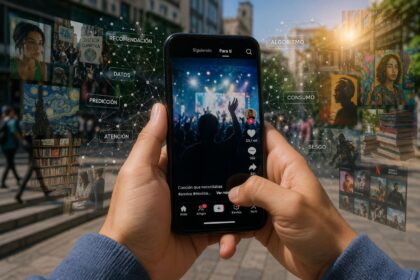
Algorithms are fundamental to how citizens distribute and consume sports information. Platforms such as Facebook , Instagram , X , TikTok , and YouTube use AI-based recommendation systems that prioritize certain content over others, which can influence access to information about sports programs.
Likewise, sustainability has become a central issue in sports management and must be reflected in public communication strategies. UNESCO (2023) has emphasized the importance of promoting sustainable practices in sporting events and recreational activities, reducing the environmental footprint and encouraging the responsible use of resources.
-
Conclusions and recommendations
Public communication in the management of sports, recreation, and physical activity in public entities must not only serve the purpose of informing but must also be consolidated as a strategic mechanism for participation, social integration, and cultural transformation. From a local perspective, it has been shown that communication planning in the sports sector in Colombia faces structural challenges, such as message fragmentation, a lack of inter-institutional coordination, and limited citizen ownership of sports policies.
However, these challenges are not unique to the Colombian context; they reflect global complexities in public communication about sports, related to equitable access to information, digitalization, and the democratization of communication in hyperconnected societies.
Strategic Situational Planning in Sports Communication should include various tools and tactics to ensure that messages effectively reach the public. These tools include:
- Press releases and traditional media: Although digital platforms have gained importance, traditional media such as radio, television, and newspapers remain essential for disseminating information in communities with limited internet access.
- Social media and digital platforms: Social media allows for closer interaction with citizens, facilitating the dissemination of information in real time and the creation of communities around sports.
- Storytelling strategies and visual narratives: Communication in sports must be based on narratives that generate emotions and connect with citizens. The use of videos, testimonials, and audiovisual campaigns can strengthen the impact of messages and foster citizen ownership of sports policies.
- Spaces for citizen participation and consultation: Communication should not be one-way. It is necessary to create spaces where citizens can express their opinions, make suggestions, and participate in decision-making regarding sports programs.
- Strengthening equitable access to sports information: It is recommended to adopt accessible communication approaches, ensuring that vulnerable populations can receive relevant information about programs and opportunities in the sports sector.
- Implementation of transmedia strategies: The combination of social media, digital platforms, and traditional media will expand the reach of messages and generate greater interaction with citizens.
- Using technological tools to measure impact: Implementing big data , artificial intelligence, and digital analytics will allow us to evaluate the effectiveness of communication strategies and make adjustments based on accurate and up-to-date data.
- Integrating public communication about sport into sustainability policies: It is essential that communication strategies in sport include messages about environmental responsibility and sustainable development, aligning with the principles of the UN 2030 Agenda.
- Ensure transparency and accountability in sports management: citizens must have access to clear and verifiable information on investment in sports infrastructure, the use of public resources, and the effectiveness of implemented policies.
Therefore, public communication applied to sports must comply with three essential principles: accessibility, participation, and transparency. First, it must ensure that all citizens, regardless of their social status or geographic location, have access to information about sports and recreation programs. Second, it must encourage citizen participation in the formulation and implementation of sports policies, creating spaces for deliberation and shared responsibility. Finally, it must guarantee transparency in the management of resources allocated to sports, avoiding the use of communication for political purposes or institutional self-promotion.
References
-
- Arango-Forero, G. (2009). 21st Century: Towards a New Ethics for Sports Journalism. Palabra Clave, 13. https://palabraclave.unisabana.edu.co/index.php/palabraclave/article/view/1465
- Ballesteros-Herencia, CA (2021). Proposal for a comprehensive communication plan in sports management. Ibero-American Journal of Physical Activity and Sports Sciences, 10(3), 160–177. https://revistas.uma.es/index.php/riccafd/article/view/12847/14382
- Campillo, C. (2011). Public Communication and Municipal Administration. A Proposed Structural Model. Pensar la Publicidad, 4(1), 45–62. http://hdl.handle.net/10045/19632
- Castells, M. (2009). Communication and Power. Alliance Editors. Madrid.
- Congress of Colombia. (1995). Law 181 of 1995 «Whereby provisions are issued for the promotion of sports, recreation, free time, and physical education, and the National Sports System is created.» https://www.mindeporte.gov.co/recursos_user/2019/Juridica/Normograma/Leyes/Ley-181-de-1995.pdf
- Congress of the Republic. (2014). Law 1712 of 2014 «By means of which the Law of Transparency and the Right of Access to National Public Information is created and other provisions are issued.» https://www.funcionpublica.gov.co/eva/gestornormativo/norma.php?i=56882
- Political Constitution of Colombia. (1991). Political Constitution of Colombia. https://www.funcionpublica.gov.co/eva/gestornormativo/norma.php?i=4125
- Eaves, D. (2009). The three laws of open government data. Eaves.ca, 30(8).
- García-García, J. (2014). Open Government: Transparency, Participation, and Collaboration in Public Administrations. National University of Colombia – Bogotá Campus. https://repositorio.unal.edu.co/handle/unal/50693
- Ladrón de Guevara, L.A. (2020). What is public communication?: Democratic co-creation from the administration and with citizens. Síntesis Collection. Ibero-American Union of Municipalists, International Development Cooperation Network (RUDICEL), Provincial Council of Jaén.
- Ladrón de Guevara, L.A. (2023). Public communication as a strategic tool for local development. Ibero-American Journal of Local Government, 23.
- Lévy, P. (2007). Cyberculture. The culture of the digital society. Anthropos. Barcelona.
- Marín-Marín, A.E. (2017). Transmedia Communication in Corporate and Public Media. Anesma. http://dx.doi.org/10.13140/RG.2.2.33843.64807
- Marín-Marín, A.E. (2024). Why is the Communications Department important in a company? Sooypro (El Colombiano). https://historico.sooypro.com/blog-de-orientacion-empresa/departamento-de-comunicacion/
- Martín-Barbero, J. (1987). From Media to Mediation. Communication, Culture, and Hegemony. Gustavo Gili SA Publishing House (revised 1991). Mexico.
- Matus, C. (1996). PES Method (Situational Strategic Planning). Editorial Center for Studies of the Bolivarian Reality. La Paz.
- Medina-Pérez, G. (2013). Sport and political communication: paths or shortcuts to foster their convergence? Political Studies, 42, 157-179. Institute of Political Studies, University of Antioquia.
- Noveck, B. (2009). Wiki government: How technology can make government better, democracy stronger, and citizens more powerful. Brookings Institution Press.
- Noveck, B. (2023). Generative AI and policymaking for the new frontier. Government Technology. https://www.govtech.com/opinion/generative-ai-and-policymaking-for-the-new-frontier
- Rodrich Portugal, R. (2022). Fundamentals of Institutional Communication: A Historical and Conceptual Approach to the Profession. Revista De Comunicación, 11(1), 212–234. https://revistadecomunicacion.com/article/view/2763
- Rojas-Torrijos, J.L. (2014). Sports Journalism: New Trends and Future Perspectives. Correspondences & Analysis, 4, 177–190. http://hdl.handle.net/11441/68618
- Scolari, CA (2013). Transmedia Narratives. When All Media Count. Planeta Group. Spain.
- Thomas, H.E., Becerra, L.D., & Bidinost, A.I. (2019). How do technologies work?: Socio-technical alliances and processes of functioning construction in historical analysis. Open Past, 10, 127–158. National University of Mar del Plata. http://hdl.handle.net/11336/175335
- UNESCO. (2015). International Charter of Physical Education, Physical Activity and Sport. https://www.unesco.org/en/sport-and-anti-doping/international-charter-sport
- UNESCO. (2023). Sport for Sustainable Development. UNESCO Montevideo. https://www.unesco.org/es/fieldoffice/montevideo/expertise/deportelac